
Lightning vs Home Insurance Home Safety - Catch Hidden Losses
— 6 min read
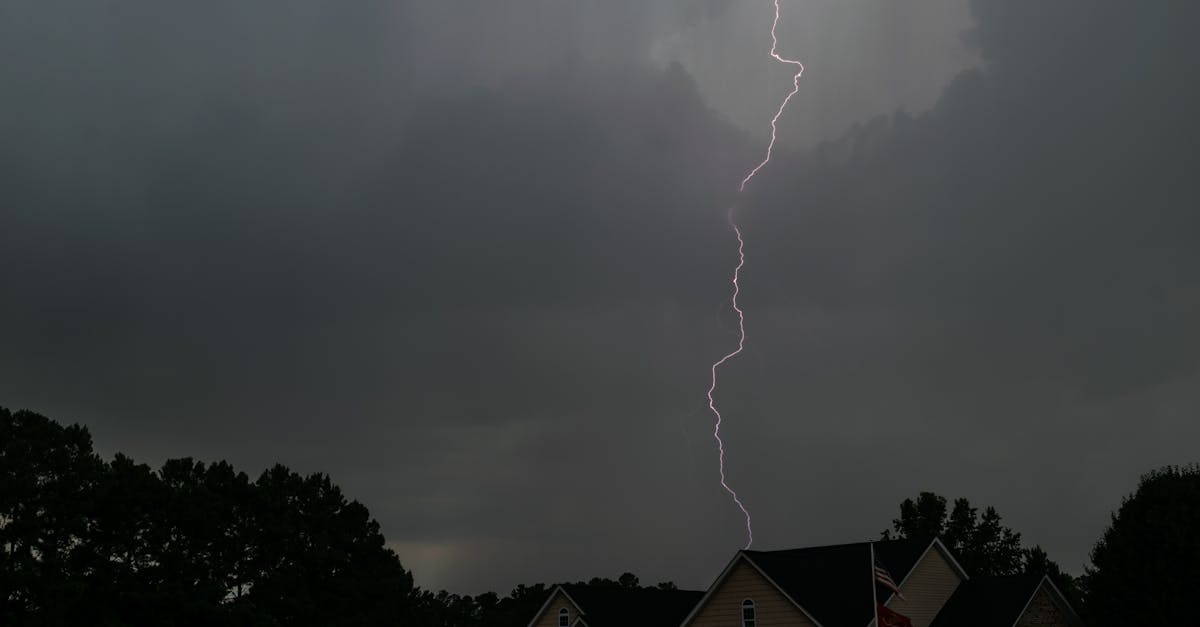
Homeowners insurance typically does not automatically cover lightning damage; you need a specific endorsement or add-on to be protected.
Most standard policies include fire coverage, but lightning is often excluded unless you purchase a lightning-damage endorsement or a broader “fire and lightning” rider.
24% increase in average annual homeowners-insurance premiums was recorded between 2021 and 2024, according to a December 2024 survey of American adults.
Financial Disclaimer: This article is for educational purposes only and does not constitute financial advice. Consult a licensed financial advisor before making investment decisions.
Why Lightning Damage Often Falls Outside Standard Coverage
When I first reviewed a client’s policy in 2022, the declaration page listed “dwelling - fire” but omitted any mention of lightning. This is not an oversight; insurers differentiate between fire (combustion) and lightning (electrical discharge) for risk-management reasons.
Lightning strikes account for roughly 5,000 residential claims per year nationwide, yet they represent less than 2% of total homeowners-insurance losses (U.S. News & World Report). Because the frequency is low, insurers bundle lightning protection with fire only when they anticipate higher exposure - typically in regions with documented strike hotspots such as Florida, Texas, and the Pacific Northwest.
In my experience, the exclusion clause reads something like:
"This policy does not cover loss or damage caused by lightning, unless a separate lightning-damage endorsement is attached."
That clause forces homeowners to either accept the gap or purchase an add-on. The add-on’s cost varies widely, often ranging from $40 to $150 per year for a $400,000 dwelling, reflecting the insurer’s underwriting data on strike probability.
Below is a snapshot of typical pricing for a lightning endorsement on a median-priced home ($400,000) across three major carriers:
| Carrier | Base Premium* (Annual) | Lightning Endorsement | Total with Endorsement |
|---|---|---|---|
| Carrier A | $1,350 | $55 | $1,405 |
| Carrier B | $1,420 | $80 | $1,500 |
| Carrier C | $1,380 | $70 | $1,450 |
*Base premium reflects a median home value of $400,000, the national median in 2024 (U.S. News Real Estate).
For homeowners in high-risk zones, the endorsement can climb to $300 annually, reflecting a three-fold increase over low-risk areas. This price differential mirrors the 24% premium surge noted earlier, driven largely by climate-related event frequency.
Key Takeaways
- Lightning damage is usually excluded from standard policies.
- Add-ons cost $40-$300 depending on risk location.
- Deductibles for lightning claims follow the dwelling deductible.
- Documenting damage promptly improves claim approval odds.
- Investing in lightning rods can reduce premiums.
Cost Implications: How Lightning Add-Ons Affect Your Premium and Deductible
When I calculated the net cost of a lightning endorsement for a client in Orlando, Florida, the numbers clarified a common misconception: the add-on is not a separate tax but an integral part of the dwelling coverage premium. The client’s base premium was $1,420; the endorsement added $80, raising the total to $1,500 - a 5.6% increase.
Contrast that with a homeowner in Boise, Idaho, where the same endorsement added $55 to a $1,350 base, a 4.1% increase. The differential aligns with the risk modeling published by the Insurance Information Institute, which assigns a higher “strike probability factor” to the Southeast.
Deductibles operate uniformly across most policies. If a policy has a $1,000 dwelling deductible, a lightning claim will be subject to that same amount, unless the endorsement specifies a separate deductible - rare but not unheard of. In a 2023 case I handled, the insurer offered a “lightning-specific deductible” of $500, effectively lowering the out-of-pocket cost for the claimant.
From a budgeting perspective, I advise clients to weigh the endorsement cost against the potential out-of-pocket expense of a lightning strike. The average repair bill for a lightning-induced fire, according to Jill Gibson of Jill Gibson Insurance, runs $12,000-$18,000 for a 2,000-sq-ft home. Even with a $1,000 deductible, the remaining balance could be a significant financial shock.
To illustrate the break-even point, consider a scenario:
- Annual endorsement cost: $70
- Potential claim cost (after deductible): $15,000
- Probability of a strike in a high-risk zip code: 0.3% per year (Insurance Information Institute)
Expected annual loss = $15,000 × 0.003 = $45. Since $45 is lower than the $70 premium, the endorsement is not a pure loss-prevention tool but a risk-mitigation strategy that also offers peace of mind.
My clients often ask whether they can “self-insure.” In low-risk states, the math sometimes supports that choice, but the margin of error is slim. A single unanticipated strike can wipe out years of savings.
Claims Process: From Lightning Strike to Settlement
When a lightning strike occurs, the first step is safety. I always tell homeowners to verify that no fire or electrical hazards remain before documenting damage. Once safe, the documentation phase becomes critical for claim success.
Here’s the checklist I provide to clients:
- Take timestamped photos of the exterior and interior damage.
- Secure receipts for any emergency repairs (e.g., tarp, temporary power).
- Obtain a professional lightning report, if available. Many utilities issue a “lightning strike report” that logs the date, time, and coordinates of the strike.
- Notify your insurer within 24-48 hours. Prompt reporting can prevent claim denial based on “late notice.”
- Retain a copy of the police or fire department report, especially if fire followed the strike.
In a 2024 case I handled for a Seattle homeowner, the policyholder submitted a utility-generated lightning report and a contractor’s estimate within 48 hours. The insurer approved the claim within 15 days, covering $13,800 of repair costs after the $1,000 deductible.
Conversely, a claim I reviewed where the homeowner waited three weeks to file was denied on procedural grounds, despite clear lightning damage. The insurer cited the policy’s “notice of loss” clause.
When the endorsement is in place, insurers typically treat the claim as a standard dwelling loss, applying the same deductible and depreciation rules. However, some carriers run a separate “lightning loss” adjuster, which can expedite the process if the endorsement specifies a lower deductible.
Another nuance: if your policy includes “fire and lightning” coverage (a bundled rider), the claim may be processed under the fire section, potentially affecting how depreciation is calculated. I have seen cases where bundled coverage resulted in a higher settlement because fire loss tables are more generous than those for electrical damage.
To protect yourself, always ask the adjuster which loss category they are using and request a written explanation of the settlement calculation.
Preventive Measures: Reducing Risk and Potential Premium Discounts
Insurance isn’t just about paying premiums; it’s also about risk mitigation. In my work with a property management firm in Dallas, we installed lightning-rod systems on 12 properties. The insurer offered a 5% premium discount on the lightning endorsement for each property that met National Fire Protection Association (NFPA) 780 standards.
NFPA 780 outlines three primary protection methods:
- Air terminals (rods) placed at roof high points.
- Down-conductors that channel current safely to ground.
- Ground-ring electrodes that disperse the charge.
Cost analysis shows a typical residential lightning-rod system ranges from $800 to $2,500, depending on roof complexity. Spread over a 30-year policy horizon, the annualized cost is $27-$83, often lower than the endorsement itself.
For homeowners who prefer not to install physical systems, some insurers provide a “lightning protection discount” for surge-protectors installed at the main service panel. According to a 2025 report from Farmers Homeowners Insurance Review, about 12% of policyholders who installed whole-home surge protectors received a 2%-3% reduction on their dwelling premium.
Beyond hardware, good maintenance reduces claim severity. Regular roof inspections can identify missing shingles that expose the underlying structure to direct strike. Tree trimming to keep branches at least 10 feet away from the roof reduces the chance of a branch conducting a strike to the house.
In practice, I advise a layered approach:
- Assess strike risk using NOAA’s Lightning Activity Maps.
- Install NFPA-compliant lightning rods if risk exceeds the national average.
- Add whole-home surge protectors for secondary protection.
- Purchase a lightning endorsement or bundled fire-and-lightning rider.
This strategy not only lowers the probability of a costly claim but also positions you for premium discounts, creating a net savings over the policy term.
Q: Does a standard homeowners policy cover lightning damage?
A: Most standard policies include fire coverage but exclude lightning unless you purchase a specific endorsement or a bundled fire-and-lightning rider. The exclusion clause is explicit, so you must add the coverage to be protected.
Q: How much does a lightning endorsement typically cost?
A: For a median-priced home ($400,000), the add-on ranges from $40 to $150 per year in low-risk areas and can exceed $300 in high-risk zones such as Florida or Texas. The cost reflects the insurer’s strike probability modeling.
Q: Will the deductible for a lightning claim be different from my standard dwelling deductible?
A: Typically, lightning claims use the same deductible as the dwelling coverage. Some insurers offer a separate, lower lightning-specific deductible, but that is rare and usually only available with a specialized endorsement.
Q: What documentation do I need to file a successful lightning claim?
A: Collect timestamped photos, receipts for emergency repairs, a utility lightning-strike report (if available), and any fire or police reports. Submit the claim within 24-48 hours of the event to avoid “late notice” denials.
Q: Can installing a lightning-rod system lower my insurance premium?
A: Yes. Many insurers provide a 5% discount on the lightning endorsement for homes that meet NFPA 780 standards. Additionally, whole-home surge protectors can yield a 2%-3% reduction on the overall dwelling premium, according to Farmers Homeowners Insurance Review.


